River Nairn and Nairn Museum
Saturday, August 22nd August; 10.30am
River Nairn:
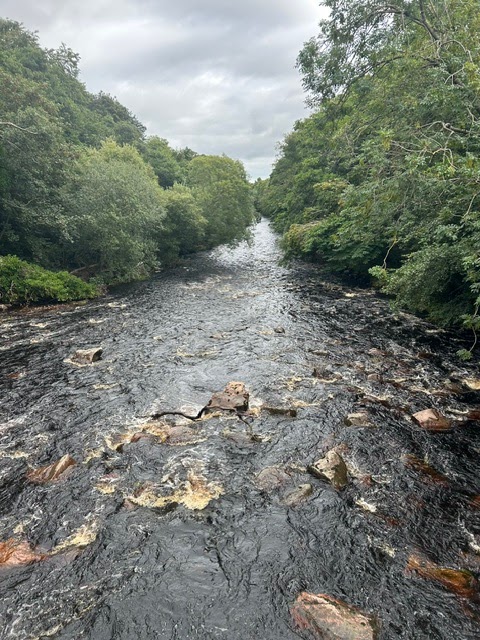
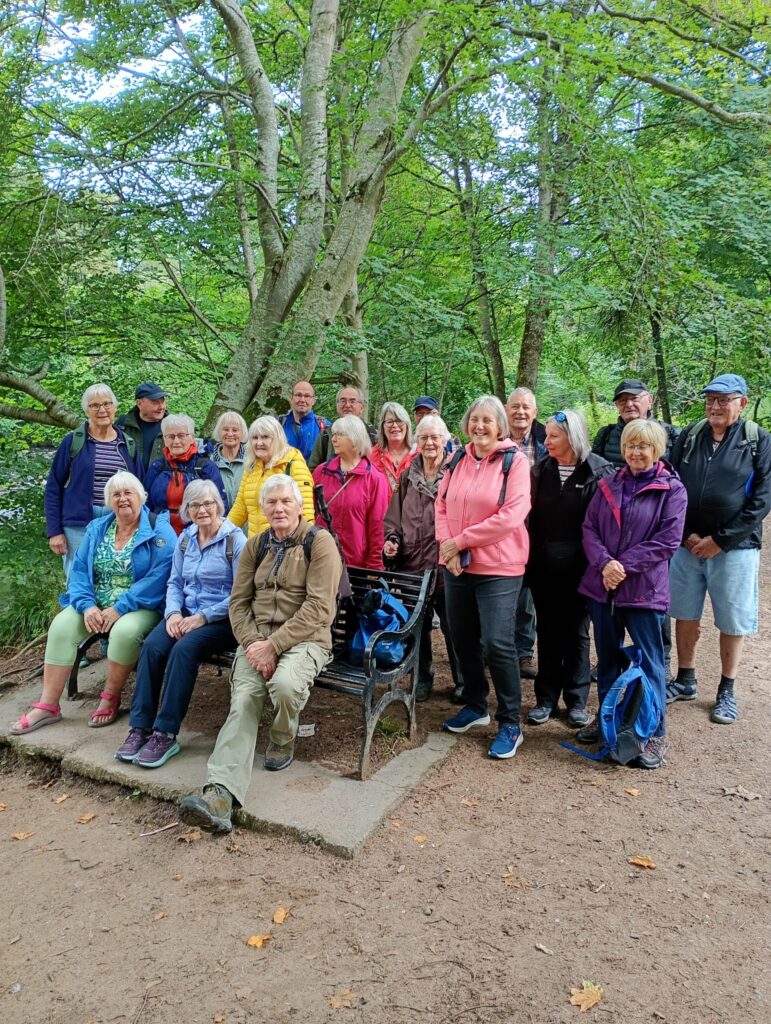
Twenty-one members met below the A96 road bridge for a leisurely walk along the River Nairn, on the path that eventually leads to Cawdor. The river, which had been very low earlier in the month, was now in full flow. The road bridge was designed and built by George Burn, who also built the old road bridge in Fochabers, in 1803/04, as part of the improvement of roads and bridges in the Highlands led by Thomas Telford. An earlier bridge of 1631 was washed away in 1794. The existing bridge was repaired after the great flood of 1829, and repaired and widened in 1936. The next bridge is the Nairn Railway viaduct, built in 1858 by local civil engineer, Joseph Mitchell who had also worked for Telford. It was built at a cost of £8620 with stone sourced from the Kingsteps quarry. A little further on is the Jubilee footbridge, which replaced an earlier, and much more interesting bridge, built in 1887, for Queen Victoria’s Golden Jubilee. This bridge was washed away in 1917. The final bridge on this section of the river is the Firhall Bridge, an odd concrete structure with steps at both ends, designed to carry a water pipe across the river. We crossed the river here and walked up the west bank as far as the railway bridge before turning up the hill to Nairn High Street.
Nairn Museum:
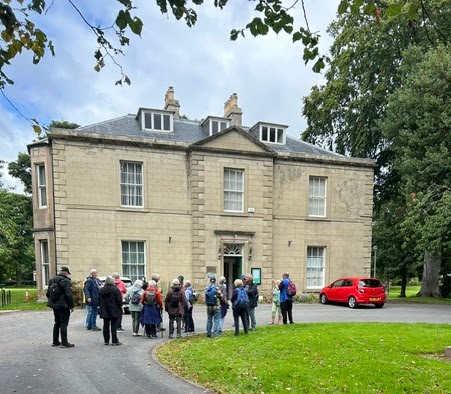
After splitting up for snacks and drinks, we met up again at Viewfield House, the home of Nairn Museum, where we were greeted by Annie Macdonald the curator.Viewfield House was built in 1803 for Colonel Ludovick Grant. The site of the bus station was once a walled garden, and a lodge stood on the site of the police station. The house was requisitioned in World War II and occupied by Polish soldiers. In 1948 it was acquired by the Council and in 2003 became the home of Nairn Museum. The statue in front of the house (with a cone on his head, on the day of our visit) is of Dr John Grigor, who did so much to promote Nairn as a health and holiday resort in the nineteenth century, and left a substantial legacy to the people of Nairn.
At present some of the upper rooms of the museum are closed for refurbishment, but there was plenty to see downstairs, including a special exhibition featuring the Kilravock papers, recently acquired by the museum, which told the fascinating history of the castle, ancestral home of the Rose family. Across the hall the other gallery tells the story of Nairn’s fishing industry. Further galleries upstairs have exhibits relating to the social and economic history of Nairn. In a special display in the hallway are two examples of artwork painted on plaster by Polish soldiers during the last war – a portrait of a woman, and a tile of a blue flower. In September 2024, experts from the BBC’s Repair Shop, removed these from the attic walls, where they were in danger of being destroyed by damp, and put them in new frames for preservation.
We received a very warm welcome from Annie and her friendly and very knowledgeable volunteers. A visit to Nairn Museum is highly recommended.