Evening walk in Fochabers with Roger Austin
Thursday, 28th May, 7pm
On a fine May evening 25 members enjoyed a walk around Fochabers led by fellow Club member and Fochabers resident, Roger Austin. Fochabers shares an anniversary with the United States, the planned village having been completed by the 4th Duke of Gordon in 1776.
According to architectural historian Matthew Woodworth, writing in the Buildings of Scotland: Aberdeenshire North and Moray, Fochabers is not only among the earliest planned settlements in Moray, but undoubtedly the finest. Its architecture is unspoilt and it has four fine distinctive churches.
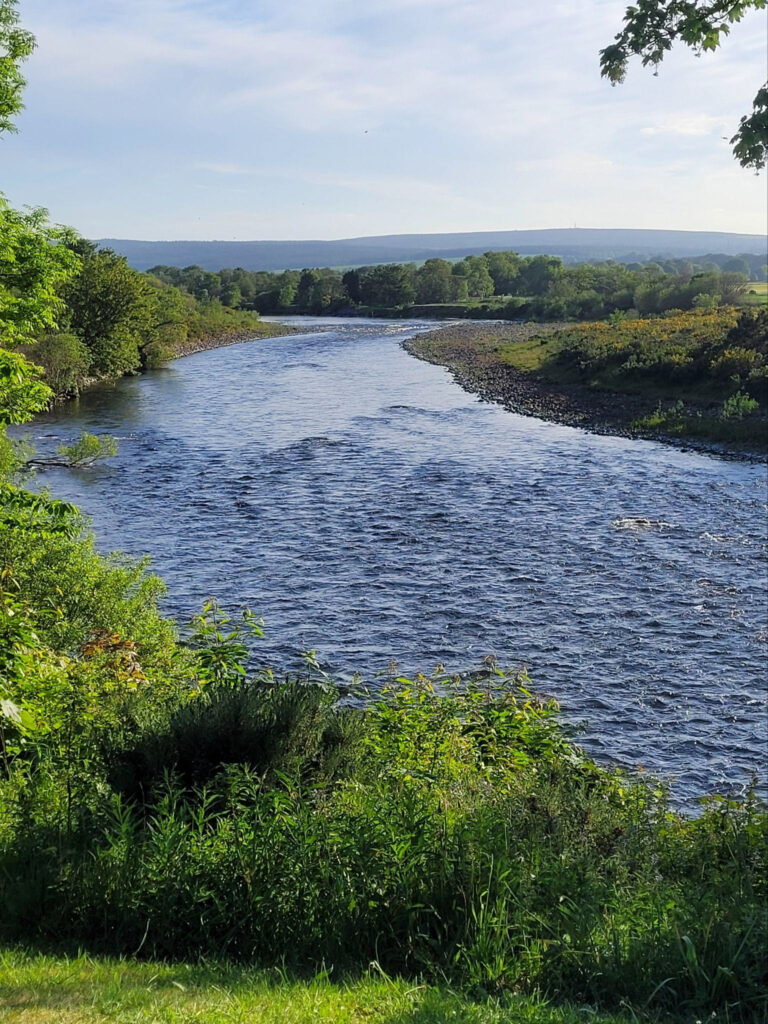
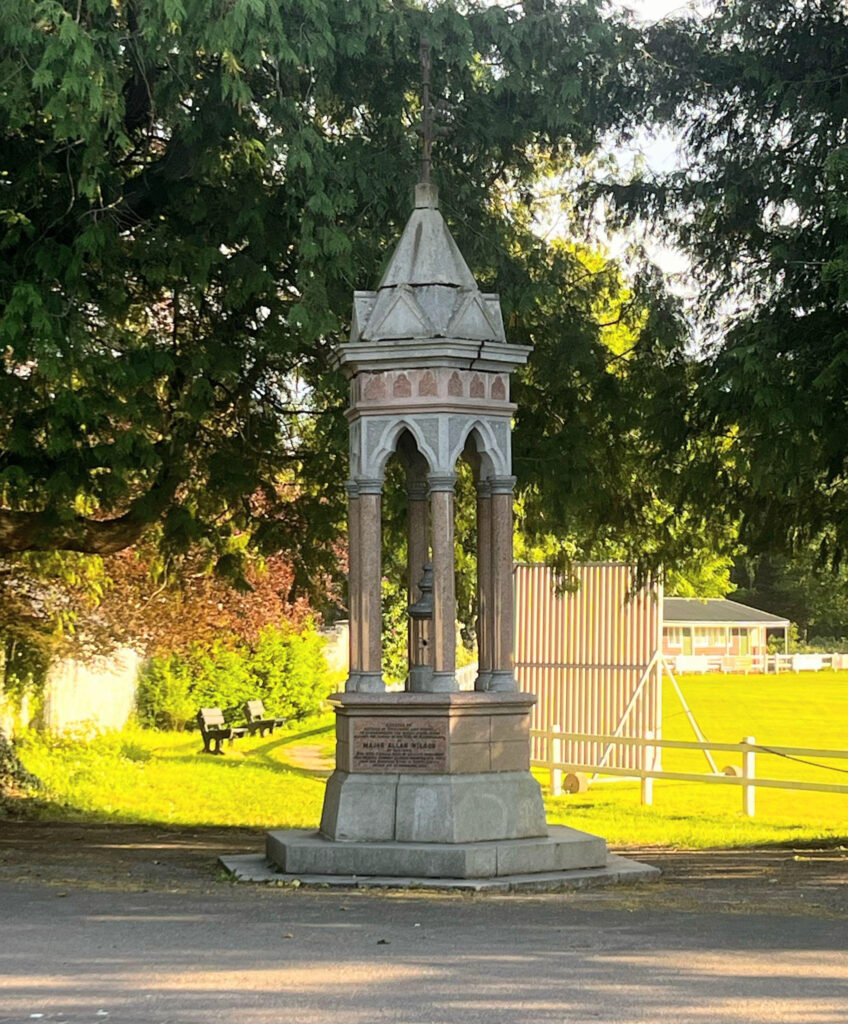
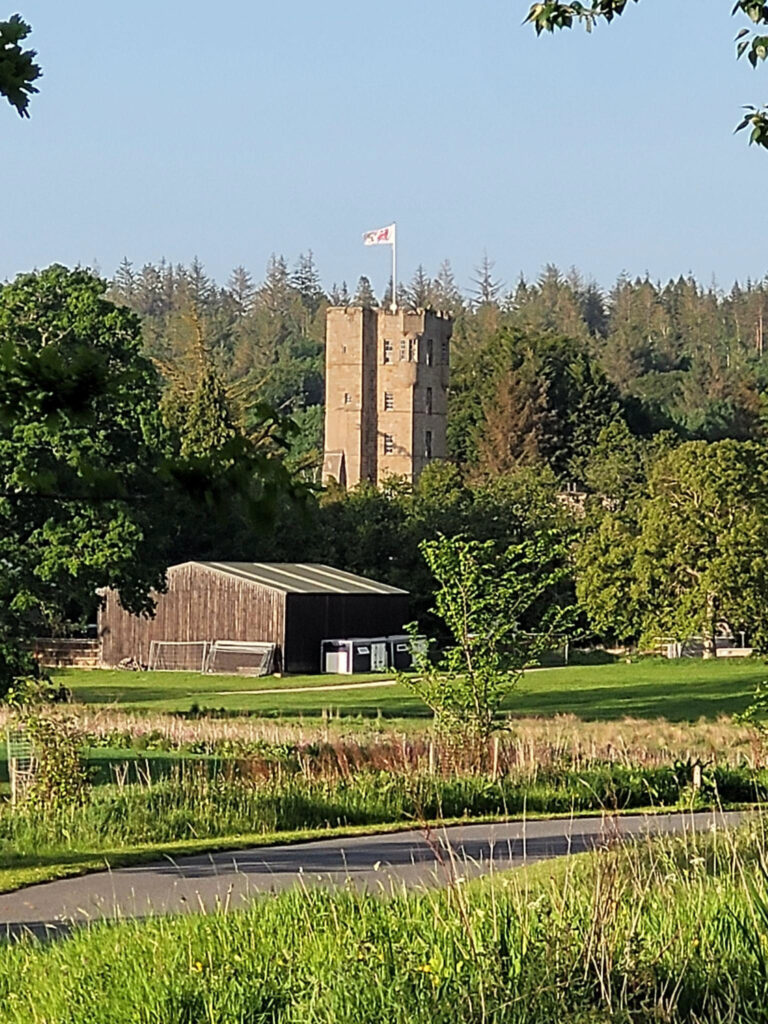
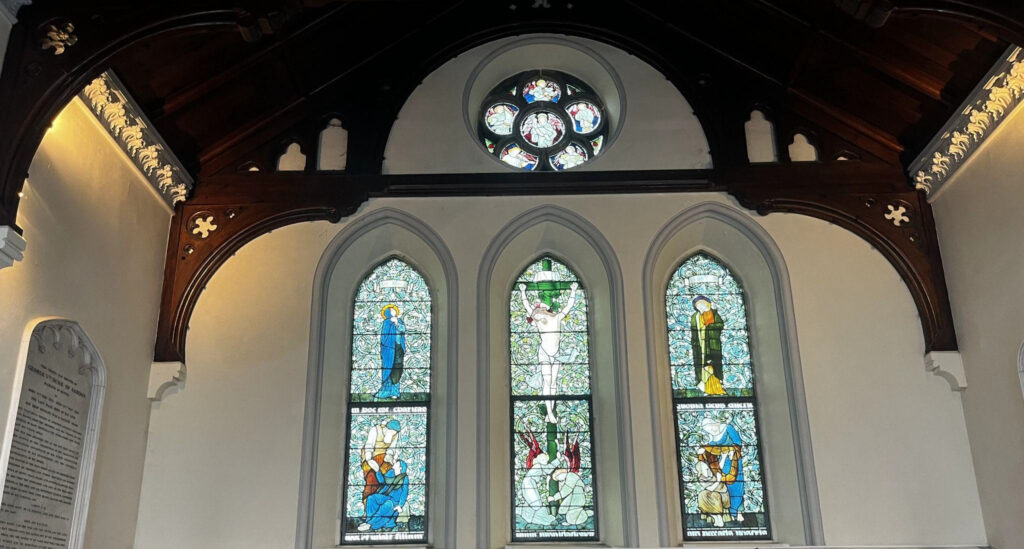
We began our walk on the steps of one of these churches, the Bellie Church (1795 -8) and admired the grand cast iron fountain, a focal point of the square, erected to commemorate the introduction of piped water to the village. Roger then led us down to the path along the Fochabers Burn, telling us about the early hydro-electric scheme whic operated here, and pointing out the fish ladders on the burn. We paused in the Memorial Garden for famous Fochaberians, and enjoyed a fine view of the Spey. Before crossing the road from the cricket pitch to the Gordon Castle Estate, we looked at the Wilson memorial erected in memory of major allan Wilson who died in 1893 during a rebellion in Matabeleland in South Africa. Passing the Fochabers War memorial , we walked into the grounds of the Castle, through wildflower meadows and woodland, until we came to the lake fringed with yellow flag iris. Roger explained a bit about the chequered history of Gordon Castle, once one of the biggest houses in the UK, of which only fragments, including the central tower now remain. Our walk ended at the Gordon Chapel, on the eastern edge of the estate and facing the Bellie Church across the square. The chapel was built by Elizabeth, wife of the 5th Duke of Gordon, as a private place of worship for the castle.Originally a school was incorporated on the ground floor; the chapel itself is on the first floor. It is now part of the Episcopal Church and is remarkable for its collection of Pre-Raphaelite stained glass windows – nine panels designed by Edward Burne Jones and made by the William Morris Company. This was a fitting end to a very enjoyable walk.
Many thanks to Roger Austin for organising and leading the walk, and to Gillian Hood for opening the Chapel for us, and also telling us about its history. Gillian is Secretary to the Vestry ofthe Isla Spey Deveron group of churches, which has an excellent website: islaspeydeveron-churches.org, which gives full historical and architectural information about the chapel and includes images of all the windows.Private visits to the chapel can be arranged by using the contact form on the website.